

How To Set Engine Timing
Ignition timing refers to the ignition arrangement that allows the spark plug to fire, or ignite, a few degrees before the piston reaches top dead center (TDC) on its compression stroke. In other words, ignition timing is the adjustment of the spark produced by the spark plugs in the ignition organisation.
When the piston travels to the meridian of the combustion chamber, the valves close and allow the engine to compress the mixture of air and fuel inside the combustion sleeping room. The ignition system's job is to ignite that air/fuel mixture to make a controlled explosion to allow the engine to rotate and produce power that can be used to motility your vehicle. The ignition timing or spark is measured in the degrees the crankshaft is rotating, bringing the piston to the top of the combustion bedchamber, or TDC.
If the spark comes before the piston reaches the top of the combustion chamber, likewise known as advanced timing, the controlled explosion will work against the engine rotating and produce less power. If the spark comes later the piston starts traveling back downward the cylinder, known as retarded timing, the pressure created when compressing the air/fuel mixture will dissipate and create a weak explosion, not assuasive the engine to produce maximum power.
A practiced indicator that ignition timing may need to be adjusted is when the engine runs too lean (as well much air, not enough fuel in the fuel mixture) or too rich (too much fuel and non enough air in the fuel mixture). These weather are sometimes shown by the engine backfiring or pinging while accelerating.
Having the correct ignition timing will allow the engine to efficiently produce maximum ability. The number of degrees volition vary between manufacturers so it is all-time to bank check the service manual for your specific vehicle to determine exactly what degree to set your ignition timing.
Office 1 of 3: Locating timing marks
Materials Needed
- Distributor wrench of the advisable size
- Free repair manuals Autozone provides free online repair manuals for certain makes and models Autozone
- Repair manuals (optional) Chilton
Older vehicles that have a distributor ignition system will have the ability to fine-tune ignition timing. Typically, timing will need to be adjusted due to the normal wear of moving parts in the ignition system. Ane caste may non be noticeable at idle, only at college speeds this can cause the vehicle's ignition system to burn down a little early or late, which volition decrease overall operation of the engine.
If your vehicle uses a distributorless ignition system such every bit coil on plug, timing cannot be adjusted equally the reckoner makes these changes on the fly when necessary.
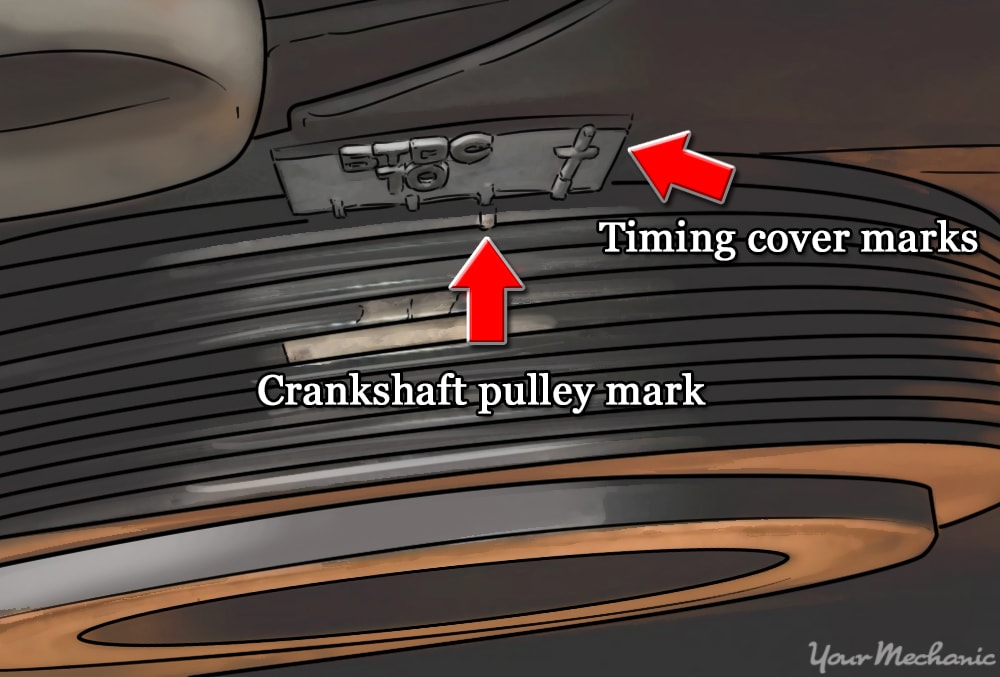
Step one: Locate the crankshaft caster. With the engine off, open the hood and locate the crankshaft pulley.
There will be a marking on the crankshaft pulley forth with caste mark(s) on the timing encompass.
- Tip: These marks can be observed while the engine is running past illuminating this expanse with the timing light to check and adapt ignition timing.
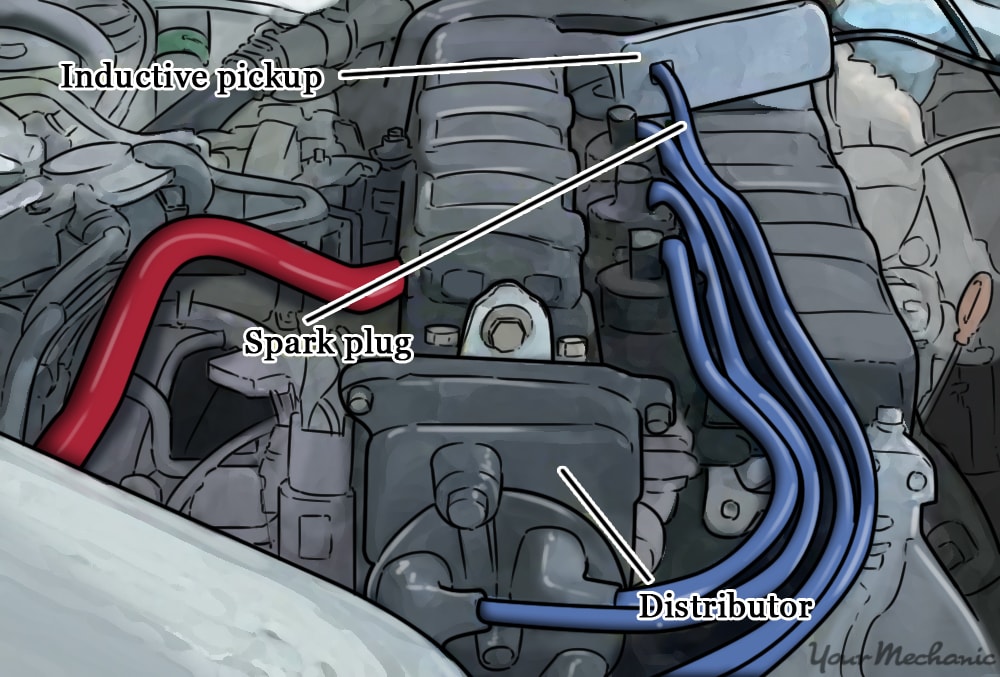
Step 2: Locate the number one cylinder. Most timing lights will have three clamps.
A positive/red and negative/blackness clamp is hooked up to the vehicle'due south battery and a third clamp likewise known as the inductive clamp, clips around the number 1 cylinder's spark plug wire.
- Tip: If you practice not know which cylinder is #1, consult the factory repair information for the firing order.

Step 3: Loosen the adjusting nut on your distributor. If ignition timing needs to be adjusted, loosen this nut enough to allow the benefactor to rotate so timing tin can be advanced or retarded.
Office 2 of 3: Determining if aligning is needed
Materials Needed
- Distributor wrench of the appropriate size
- Gratis repair manuals Autozone provides free online repair manuals for certain makes and models Autozone
- Repair manuals (optional) Chilton
- Timing light
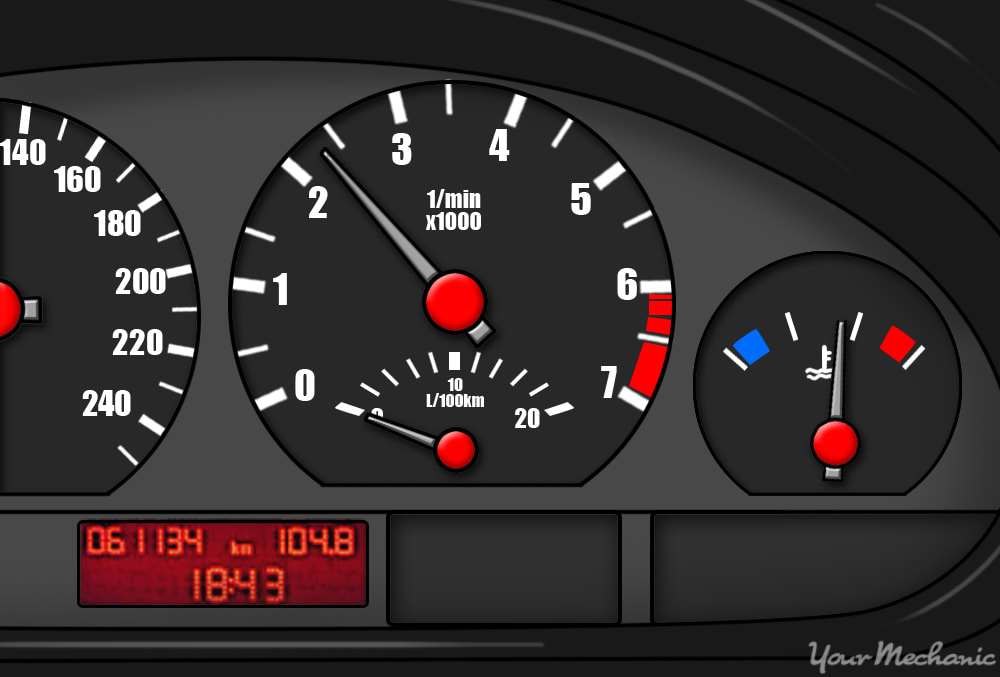
Step one: Warm upwardly the engine. Offset the engine and allow it to ascent to an operating temperature of 195 degrees.
This is indicated with the temperature judge needle reading in the middle of the gauge.
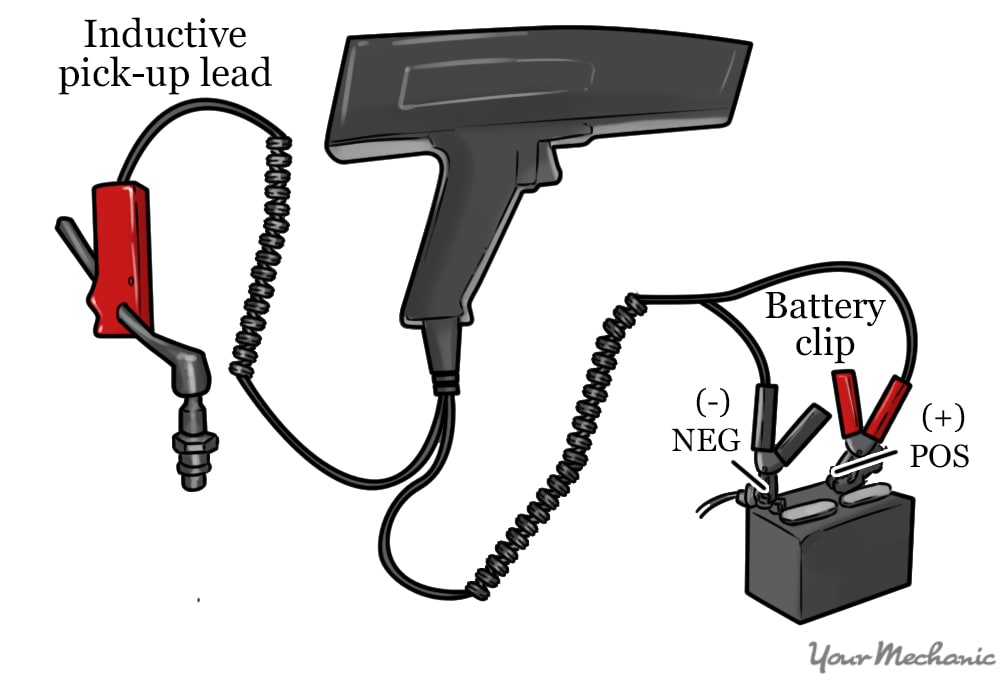
Step 2: Attach the timing light. Now is a practiced fourth dimension to attach your timing low-cal to the battery and number i spark plug and shine the timing calorie-free at the crankshaft pulley.
Compare your readings to the manufacturer's specifications in the factory repair manual. If the timing is out of spec, you will need to adjust it in order for the engine to run at maximum performance.
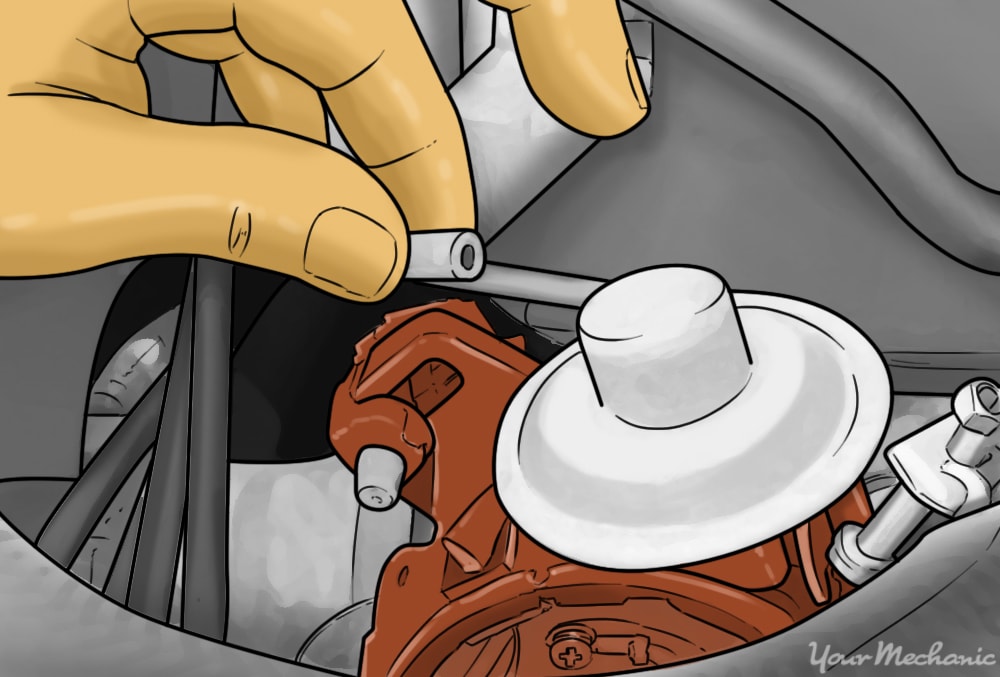
- Tip: If your vehicle has vacuum-assisted ignition timing, disconnect the vacuum line going into the distributor and plug the line with a small commodities to prevent a vacuum leak while the timing is being adjusted.
Part 3 of 3: Performing the adjustment
Materials Needed
- Benefactor wrench of the appropriate size
- Complimentary repair manuals Autozone provides gratuitous online repair manuals for certain makes and models Autozone
- Repair manuals (optional) Chilton
- Timing light
Stride i: Loosen the adjusting nut or commodities. Return to the adjusting nut or commodities on the distributor and loosen information technology enough to allow the distributor to rotate.
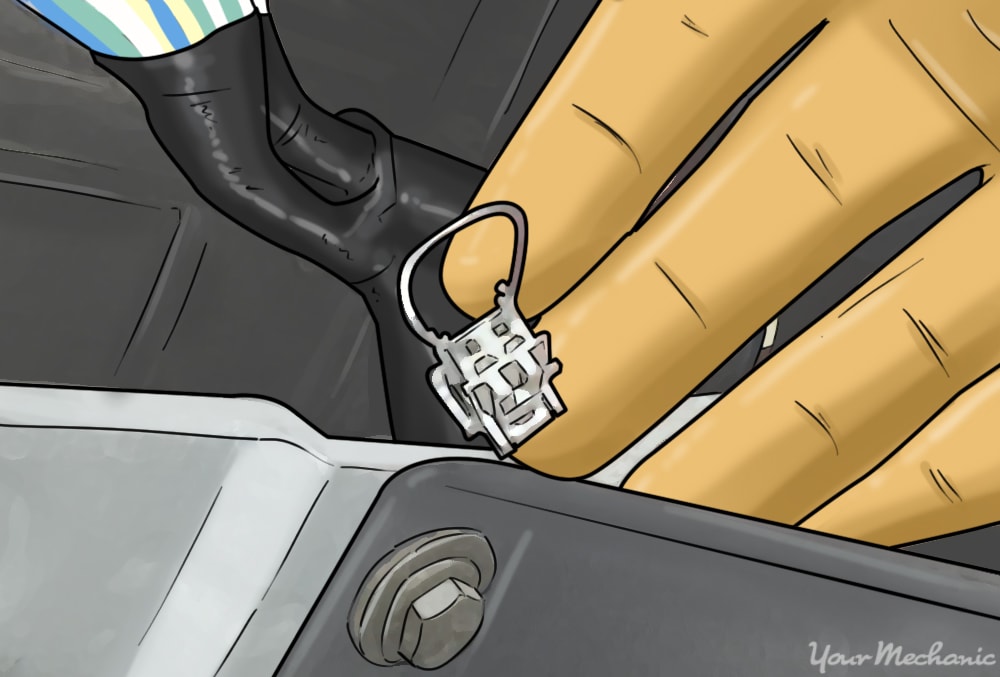
- Tip: Some vehicles require y'all to install a jumper wire on an electrical connector to short or break the connection with the vehicle's estimator and then timing can be adjusted. If your vehicle has a computer, overlooking this footstep will preclude the estimator from accepting the adjustments.
Footstep 2: Rotate the distributor. While using the timing light to look at the timing marks on the crank and timing encompass, rotate the benefactor to make the necessary adjustments.
- Note: Each vehicle may vary, but a general rule of thumb is, if the rotor inside the benefactor spins clockwise with the engine running, rotating the distributor counterclockwise will accelerate ignition timing. Rotating the distributor clockwise will perform the reverse and retard ignition timing. Use a steady gloved hand to slightly rotate the distributor in either direction until the timing is within the manufacturer'southward specifications.
Stride 3: Tighten the adjusting nut. One time timing has been set at idle, tighten the adjusting nut on the distributor.
Have a friend blip the throttle. This involves quickly pushing on the accelerator pedal to increase engine RPM so releasing it, allowing the engine to fall back to idle, therefore confirming the timing is set to specifications.
Congratulations! You lot accept merely set your ain ignition timing. In some cases ignition timing will be out of spec due to a stretched timing chain or belt. If, subsequently setting timing, the vehicle is showing symptoms of untimed, it is recommended y'all consult a certified mechanic, such as one from YourMechanic, for further diagnostics. These professional technicians tin can set your ignition timing for you, too as make certain your spark plugs are up to date.
The statements expressed above are only for advisory purposes and should exist independently verified. Delight see our terms of service for more than details
Source: https://www.yourmechanic.com/article/how-to-adjust-timing-on-a-car-by-rocco-lovetere
0 Response to "How To Set Engine Timing"
Post a Comment